ceylon · origins · education
Gem Mines in Sri Lanka: Elahera and Balangoda, Beyond Ratnapura
Most people know Ratnapura, but gem mines in Sri Lanka are spread across the island. A look at Elahera, Balangoda and the island's other gem fields.
By Madhuki GemsPublished Updated 2 min read
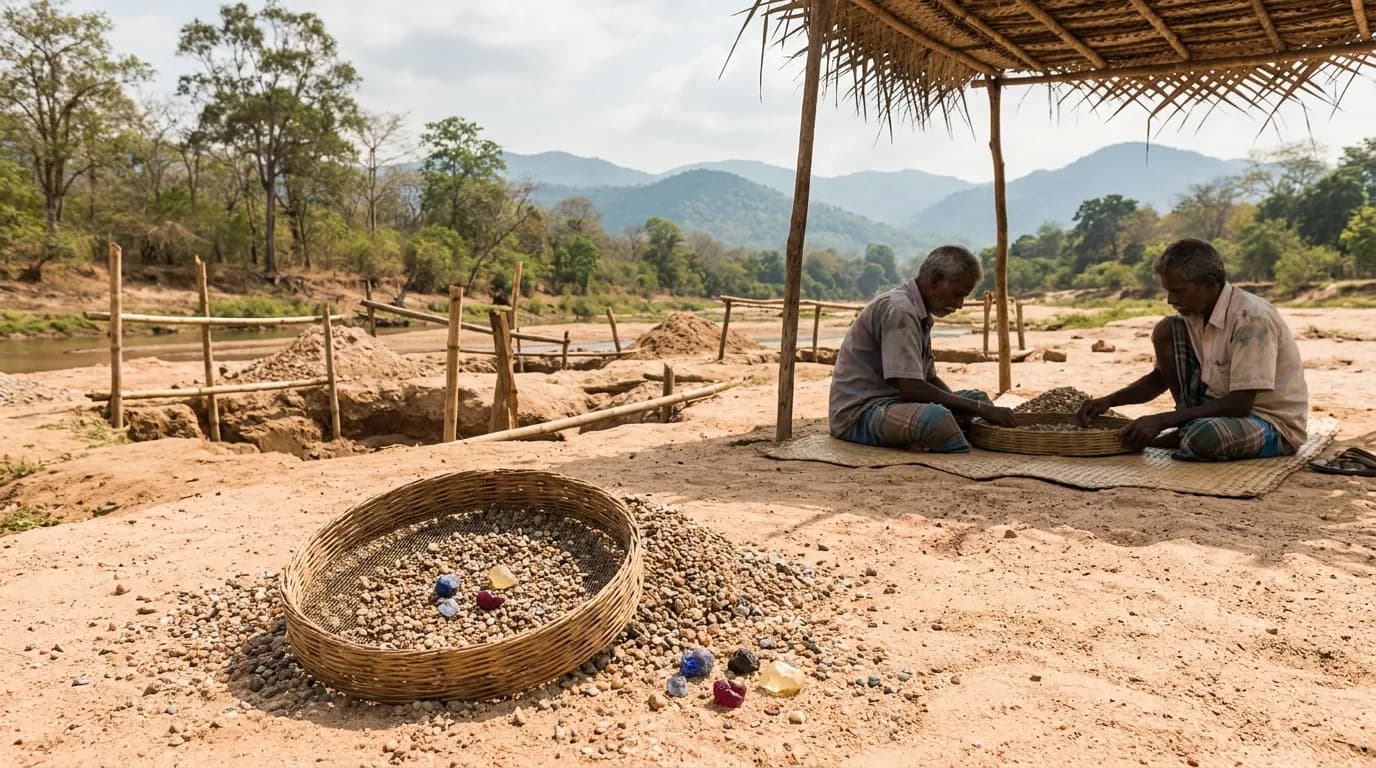
Ask anyone about Sri Lankan gems and they will mention Ratnapura. Yet gem-bearing gravels are found across much of the island, and several other areas have long histories of mining. Here is an introduction to two of the best known, Elahera and Balangoda, and why the island has so many gem fields at all.
Why Sri Lanka has so many gem fields
Much of Sri Lanka is built on very old metamorphic rock, formed under great heat and pressure deep in the earth. These rocks host corundum, spinel, chrysoberyl, garnet and many other gem minerals. As rivers wore the highlands down, they carried the hard gem crystals into valleys and plains and left them in layers of gravel. Wherever those old river gravels survive, there may be gems, which is why mining areas are scattered from the south-west to the centre and east of the island.
Elahera
Elahera lies north of the central highlands and is one of Sri Lanka's most important gem areas outside the Ratnapura region. Its gravels have produced sapphire, spinel, chrysoberyl and other gems. As around Ratnapura, much of the mining is done in small pits, with gravel washed and sorted by hand.
Balangoda
Balangoda sits in the hills east of Ratnapura, within the same Sabaragamuwa province. Its valleys belong to the same broad gem-producing landscape, and local pits have supplied sapphires and other gems to the cutting and trading centres for generations.
Other gem areas
Gems are also mined further south and east, including around Okkampitiya, which is known for sapphires. New finds still happen: when a promising deposit is discovered, small-scale miners can arrive quickly, and some fields produce heavily for a few years before slowing down.
Does it matter which field a gem came from?
For most buyers, the more useful fact is the country of origin, which gem laboratories can sometimes give as an opinion based on a stone's inclusions and chemistry. Laboratories do not usually identify the specific field within Sri Lanka, so claims about an exact mine rely on the seller's own records and honesty.
That is why we focus on what can be checked: identity, weight, colour, clarity, cut and treatment. When we know more about where a stone came from, we say so, and we do not claim what we cannot support.
Supporting the people who mine
Across all these areas, gem mining supports many families. Read more in responsible gem mining and local livelihoods, and see how pit mining works in our guide to Ratnapura gemstones.
Gems from Sri Lanka's gravels
Sapphire and spinel are the island's signature finds; our Ceylon sapphire guide and Ceylon spinel guide explain what to look for. To see gems in their natural state, browse our rough sapphire crystals.