ceylon · origins · education
Ratnapura Gemstones: Inside Sri Lanka's City of Gems
Ratnapura gemstones have come from the same river gravels for centuries. How mining works in Sri Lanka's City of Gems, and what comes out of the pits.
By Madhuki GemsPublished Updated 2 min read
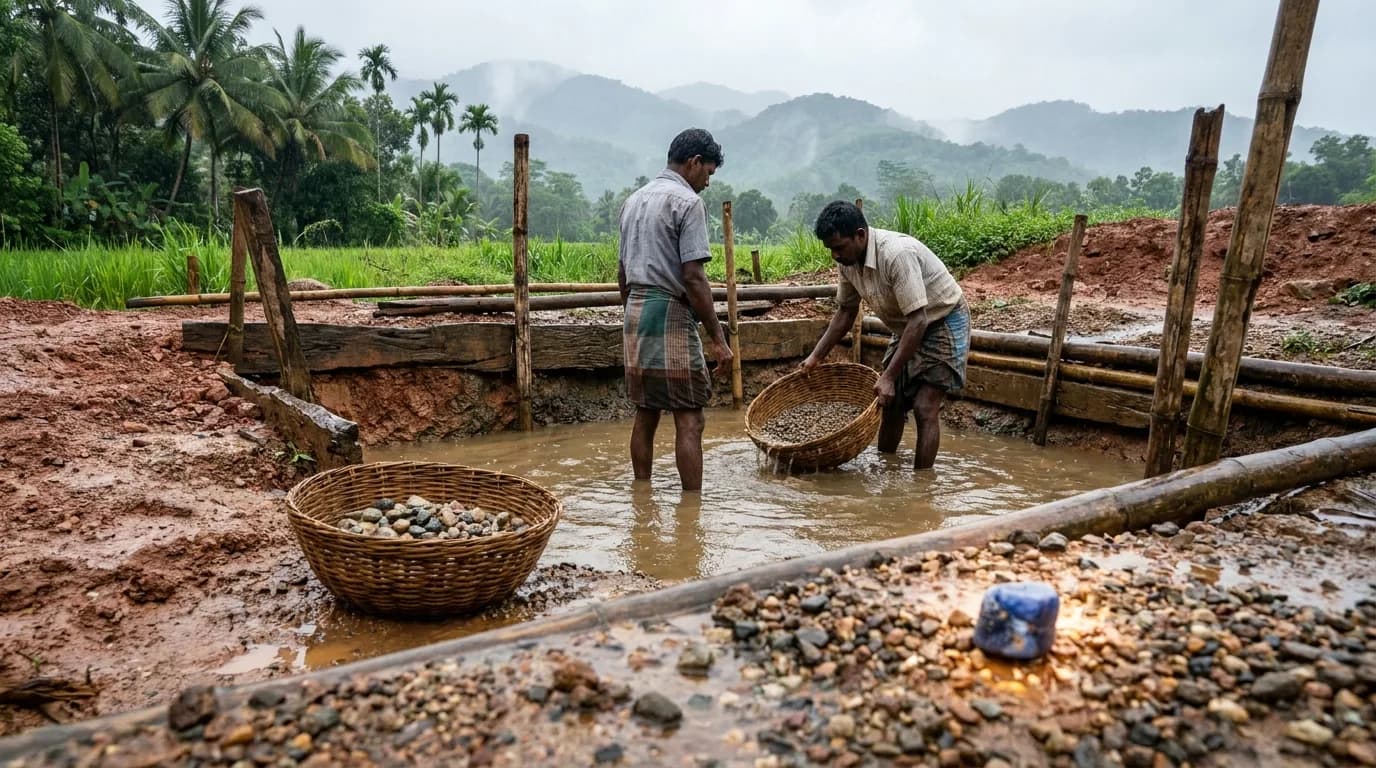
Ratnapura means "city of gems", from the Sanskrit and Sinhala words ratna (gem) and pura (city). The town sits in the wet south-western foothills of Sri Lanka's central highlands, in the province of Sabaragamuwa, and the name is earned: the valleys around it have supplied sapphires, rubies and other gems for many centuries.
Why there are gems here
Most of Sri Lanka's gems formed deep underground in ancient metamorphic rocks. Over millions of years, rain and rivers wore those rocks down and carried the hard, heavy gem crystals downstream, where they settled in layers of gravel. Around Ratnapura this gem-bearing gravel, called illam, usually lies beneath several metres of clay and soil, sometimes in old riverbeds that are now paddy fields.
How a gem pit works
Much Ratnapura mining is still small-scale and done largely by hand:
- Miners sink a shaft, lining it with timber to stop the walls collapsing, and pump out groundwater as they dig.
- When they reach the illam layer, the gravel is hauled to the surface in buckets.
- The gravel is washed in round, shallow woven baskets, swirled in water so the lighter material spills away and the heavy stones stay behind.
- An experienced eye then sorts the concentrate, picking out rough gems from ordinary pebbles.
Gem mining in Sri Lanka is licensed by the National Gem and Jewellery Authority, and many pits are worked by small teams who share in the value of what they find.
Which gems are found around Ratnapura
The gravels are remarkably mixed. A single wash can contain:
- Blue and fancy-coloured sapphire, the most important find (see our Ceylon sapphire guide)
- Ruby, much scarcer than sapphire (Ceylon ruby guide)
- Spinel in reds, pinks and purples (Ceylon spinel guide)
- Chrysoberyl, including cat's eye and alexandrite
- Garnet, zircon, tourmaline and topaz
From pit to market
Rough stones pass from miners to dealers, many of whom trade in and around Ratnapura town. Cutters then decide how each crystal should be shaped, balancing weight against colour and brilliance; read how a rough crystal becomes a faceted gem. Some crystals are kept uncut for collectors who value the natural shape.
Visiting Ratnapura
Ratnapura is a few hours by road from Colombo, and some mines welcome visitors. If you plan to buy while you are there, prepare first: our travel tips for buying gems in Sri Lanka cover what to ask and what to avoid.
Beyond Ratnapura
Ratnapura is the best-known gem town, but not the only one. Read about gem mines in Sri Lanka at Elahera and Balangoda, or see rough sapphire crystals from Sri Lanka's gem gravels in our shop.